What Is a Refrigerator Trim Kit? A Complete Guide to Creating a Built-In Kitchen Look
Table of Contents
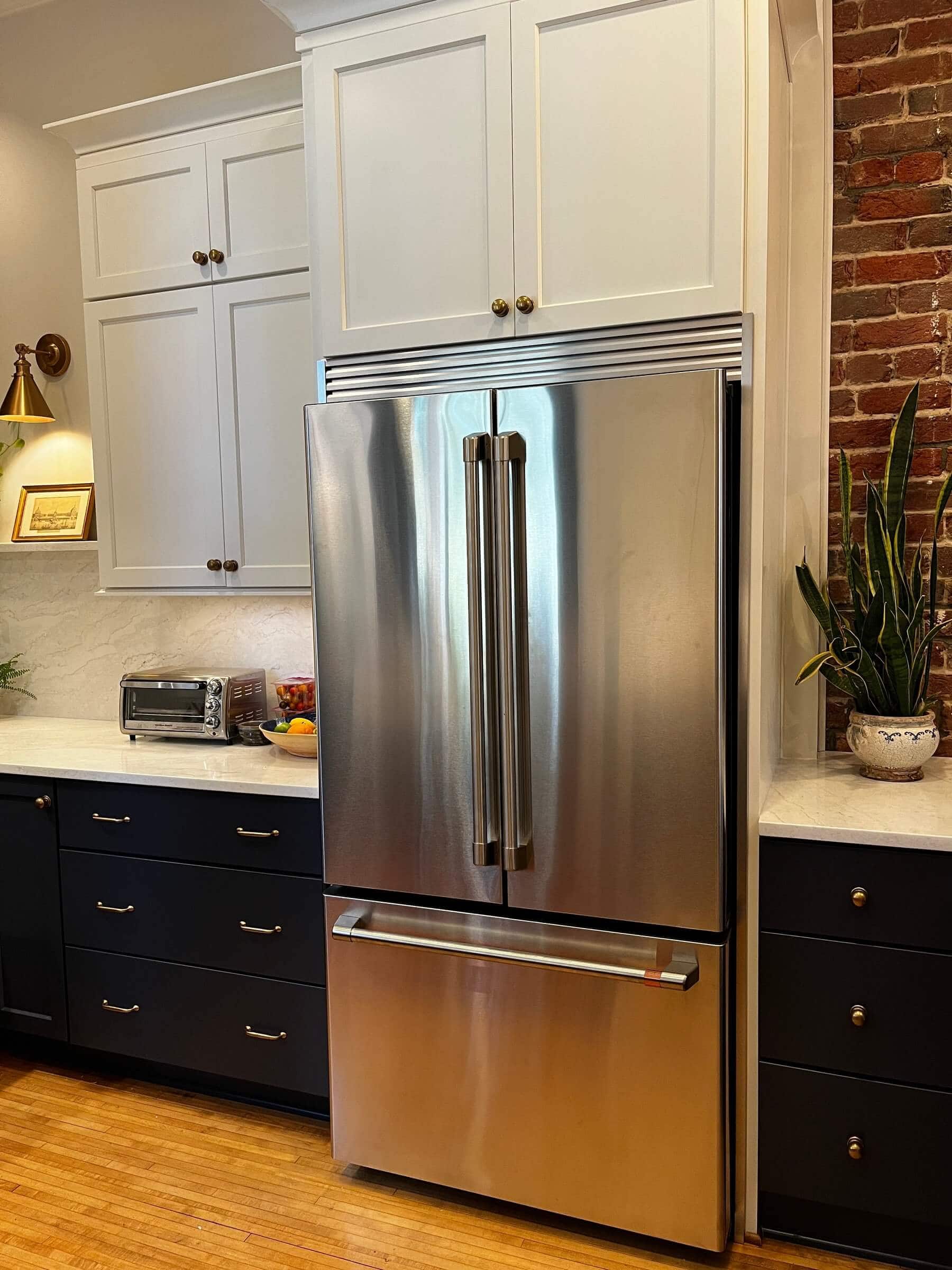
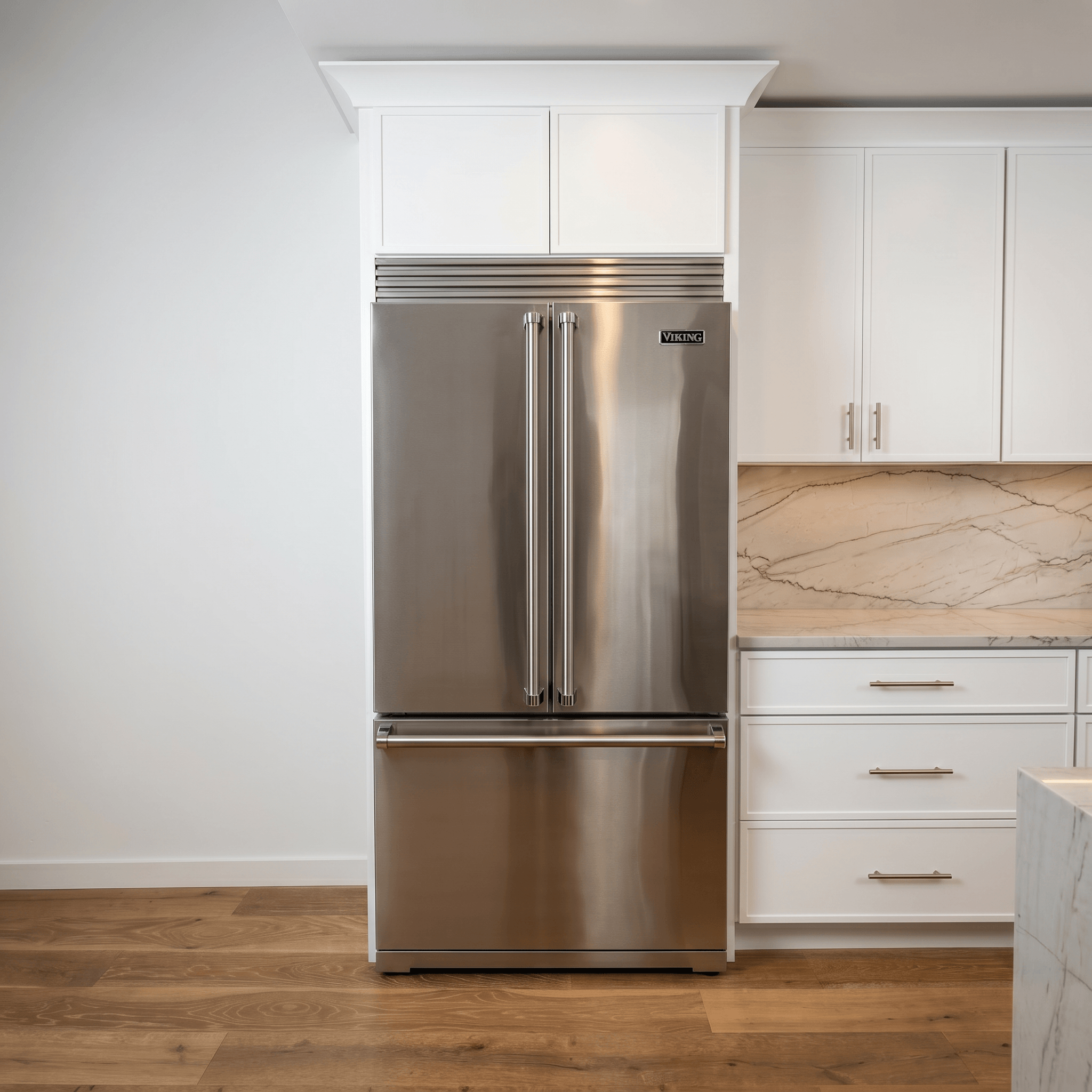
A refrigerator trim kit is a stainless-steel framing system that surrounds your refrigerator and makes it look like it was built into the cabinetry. It closes the gaps on the sides, top, and sometimes the bottom — the spaces that make a freestanding refrigerator look like it was just shoved into an opening and left there.
The goal is to mimic the look of a true built-in refrigerator — the kind you see in high-end kitchens from brands like Sub-Zero or Viking — without paying $10,000–$15,000 for the appliance itself.
What's Actually in the Kit
Our refrigerator trim kits are custom-fabricated to your measurements. Every kit ships with all mounting hardware and an installation video. The components cover the gaps specific to your opening — top, sides, or both — depending on what your install requires.
For standard-depth refrigerators where the painted sides of the case are visible, we also offer side panels separately. Those cover the exposed case and bring everything into a consistent finish.
Finish options: Brushed Stainless, Black Stainless, Matte Black, and Satin White.
How It's Different From a True Built-In
A true built-in refrigerator comes with its own OEM trim as part of the package. The cabinets have to be built to exact manufacturer specs, and the whole system is engineered to fit together precisely. It looks great — and it costs accordingly.
A custom trim kit takes a different approach. Because it's built to your specific measurements, it works around real-world cabinetry that isn't perfectly sized. It also pairs with virtually any refrigerator — including standard freestanding models you can buy at any appliance store. That flexibility is the whole point.
One thing worth knowing: there are no universal refrigerator trim kits. That term gets used in searches, but it doesn't correspond to anything real. You're either buying OEM trim for a true built-in, or you're ordering a custom kit made to your dimensions.
What to Look for in a Refrigerator
Since a trim kit works with most models, the refrigerator choice mostly comes down to aesthetics — specifically, how close you can get to that built-in look.
A few things to consider:
Counter-depth vs. standard-depth — Counter-depth refrigerators sit closer to the cabinet line and typically give the cleanest result. Standard-depth models protrude further, but they work too. If you're doing new construction or a remodel and can recess the refrigerator into the wall, a standard-depth unit will give you more storage volume, a true built-in appearance, and — counterintuitively — a lower appliance cost than a comparable counter-depth model.
Door geometry — Flat door fronts and low-profile handles photograph and install cleanly. Heavily curved doors or handles with a lot of projection contrast with the trim and can soften the built-in look. It's not a dealbreaker, but if you're choosing a refrigerator specifically for this project, it's worth keeping in mind.
Door clearance — Some refrigerators have very thick doors that protrude noticeably into the kitchen. Some newer LG models use zero-clearance hinges, so the doors don't have to swing out into the room at all. That's worth considering if door swing is an issue in your space.
Airflow
This comes up often. The short version: our trim kits are designed to maintain airflow, not block it.
On a standard install, we leave 1/8" to 3/16" on the sides — enough for air to circulate and for the unit to be pulled out when needed. The top grille is vented along the back to let heat escape upward.
We also ran a heat transfer study on a flat, flush-mount kit — the worst-case scenario with maximum restriction. Most refrigerators are rated for ambient temps of 110–120°F. Our study found that a fully flush trim kit reduces that effective operating range by about 10 degrees. So a unit rated for 110°F ambient would effectively be limited to 100°F with a flush trim kit on it. Pull your refrigerator's spec sheet and check that number if you want to be thorough.
If you have a specific setup you're unsure about, reach out and we can talk through it.
Installation
Every kit comes ready to install — all hardware included, step-by-step video included. The only tools you need are a tape measure and a cordless screwdriver.
Most installs take 15 to 30 minutes. A lot of customers do it themselves without any issues. If you'd rather hand it off, any carpenter or handyman can handle it.
What It Costs
Pricing varies depending on the configuration — a top-only grille is a different scope than a full surround with side panels for a large French door unit. Either way, it's a fraction of what a true built-in refrigerator costs. You can see current pricing on our shop page.
Does It Actually Look Built-In?
Yes — when it's fitted correctly, it does. You can see finished installs in our gallery. That's the most useful reference if you're still trying to picture what the end result looks like.
If you've got a specific refrigerator or cabinet situation and want to talk through whether a trim kit makes sense, feel free to reach out. We're happy to help.
Frequently Asked Questions
What's the purpose of a refrigerator trim kit?
It closes the gaps between your refrigerator and the surrounding cabinetry so the appliance looks like it belongs there — integrated and intentional, rather than just placed in an opening.
Do trim kits work with all refrigerator brands?
In most cases, yes. The only situation where it doesn't work is when the existing gaps are extremely tight and we can't fabricate something narrow enough. That's uncommon. If you're not sure, send us your measurements.
Can it make a standard freestanding refrigerator look built-in?
Yes. That's exactly what it's designed to do. The results vary based on the refrigerator model and the cabinet opening, but a well-fitted trim kit makes a real difference. See the gallery for examples.
Can I install it myself?
Yes. Tape measure and cordless screwdriver. The installation video walks you through it. Most installs are done in 15–30 minutes. You can also find more detail on our how it works page.
What type of refrigerator works best?
Counter-depth models give the cleanest result because they sit closer to the cabinet line. Standard-depth works too — especially if you can recess the unit into the wall, which actually gets you more storage at a lower appliance cost.
Will it block airflow?
Not if it's installed correctly. We leave side clearance on every install and vent the top grille. We've done the testing on this — see the airflow section above for the full explanation.
Does it increase home value?
Built-in refrigeration is standard in luxury homes. Adding that look to a mid-range kitchen raises the perceived quality of the space, and that tends to matter to buyers.