

Refrigerator Sticking Out Too Far? How to Avoid (or Fix)
Is your refrigerator sticking out too far? Are you in the market for a new refrigerator? Or maybe you have a fridge you like, but is sticking out too far?
It can be overwhelming to know what specific models are right for you and your family. With all of the options out there, how do you make sure you're getting the perfect fit? This can arise especially when it comes to understanding fridge dimensions such as depth, width and height. Fear not! We've got an easy guide on how to choose a refrigerator that meets all of your needs — just read on!
If you have an existing refrigerator that sticks out, you may want to jump to the end of this article where we discuss various solutions.
Quick Links:
Standard vs. Counter Depth Refrigerators
Hinge Configuration: What to Look For
Door Thickness and why it matters
What if my fridge sticks out past my cabinets?
Standard vs. Counter Depth Refrigerators
Have you ever been shopping for a refrigerator or designing your kitchen and found yourself wondering what the difference is between a counter depth and regular depth refrigerator? Well, wonder no more! The biggest difference between the two is, you guessed it, depth. The case (the part that isn't stainless steel) on a counter depth refrigerator typically measures around 24 inches deep, while the case of a regular depth refrigerator is generally closer to 29 inches deep.

One common mistake homeowners make is to not consider the thickness of the doors. I'll dive into this later in more detail, but it's important to note that the dimensions above are only for the case of the refrigerator and do not include the thickness of the doors. This may not seem like a huge difference, but some doors are over 4" thick and when you're worried about aesthetics or working with a small kitchen, those few inches can make a big impact. This small difference can result in the refrigerator sticking out farther than you might like into the kitchen.
It's also important to note some other differences between counter depth and standard depth refrigerators. The first is volume. Standard depth refrigerators typically have about 30% more interior storage volume than counter depth refrigerators. This can be a big deal if you have a large family or don't go to the grocery store as often as you'd like. The second difference is cost. Believe it or not, counter depth refrigerators are typically more expensive than regular depth refrigerators.
Pro Tip: If you are designing a new kitchen, one option to consider is recessing your refrigerator cabinet into an adjacent room (we've seen this many times from our customers). This allows you to purchase a regular depth refrigerator (more volume and less expensive), but achieve a counter depth look.

Hinge Configuration: What to Look For
Another factor to consider when shopping for a refrigerator - counter depth or regular depth - is the hinge configuration. Below are three refrigerator hinges. The first hinge shown is a "zero clearance" hinge, meaning it requires almost zero clearance to the left and right of the refrigerator for the door to open.
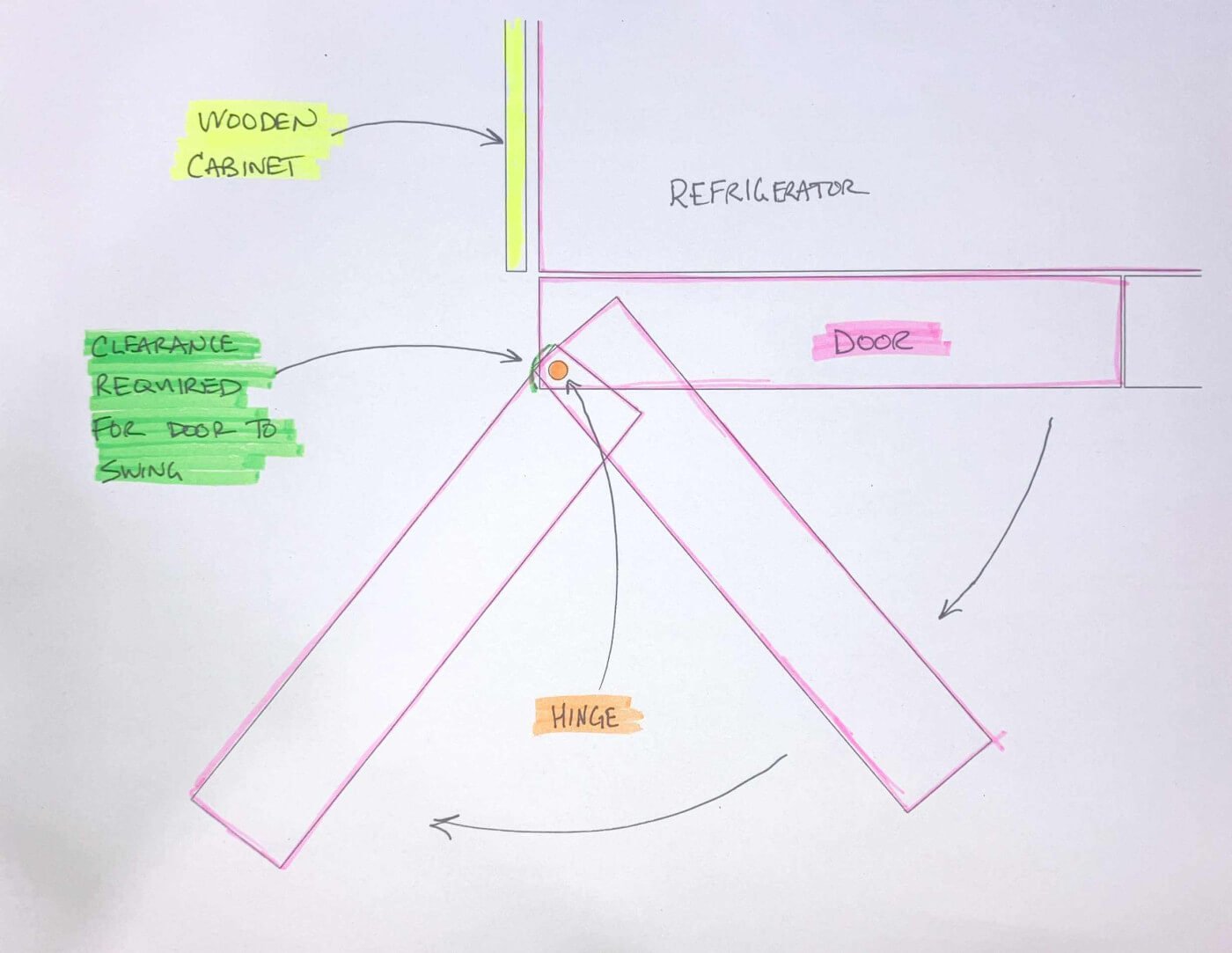
The second hinge shown is a more common hinge configuration. The doors require a ample clearance for the doors to swing fully open.
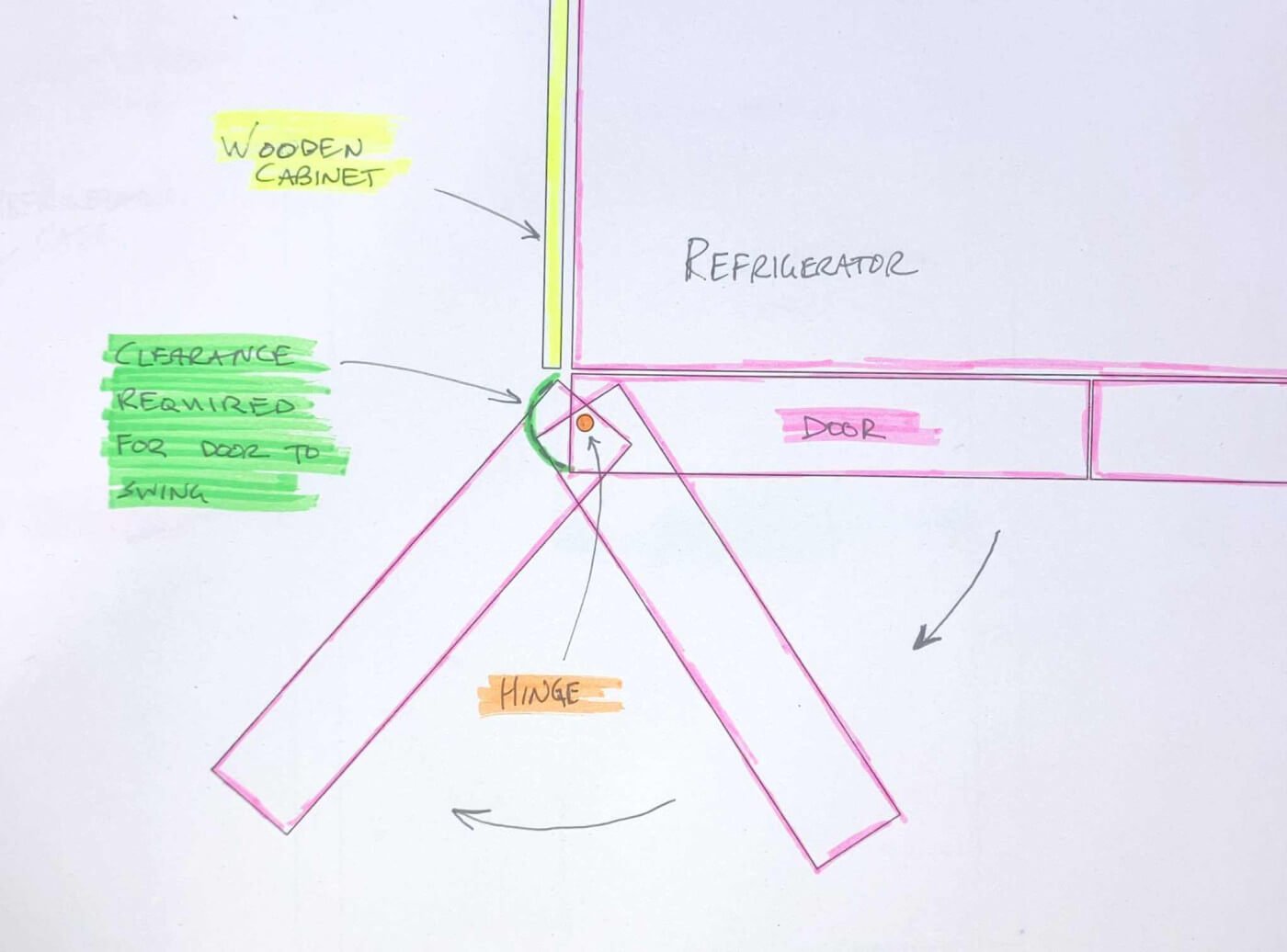
There are even some poorly designed refrigerators on the market configured such that the doors swing BACK into the cabinet when fully opened. This requires the painted case of the refrigerator to be pull out past the cabinets just to avoid interference, which leads to the refrigerator sticking out farther than necessary. See below for an illustration.

The bottom line is you need to be aware of hinge configuration when shopping. When shopping, you can simply open the doors of the refrigerator and watch as the door swings to get a feel for how much clearance is required.
Door Thickness and Why it Matters
A common comment we hear from customers is "I didn't know the doors of my refrigerator were going to stick out so far into the kitchen". The reason for this is simple...many homeowners assume they can recess the entire refrigerator into the cabinet opening such that the doors are flush with the front of the cabinet. Due to a combination of cabinet depth and door swing clearance requirements, this is typically not possible. There are only a few models on the market that require "zero clearance" and can be recessed in the opening, but the cabinet must be deep enough to accommodate these units.
If door thickness is a concern, the best option is to browse refrigerators at your local appliance store with the understanding that the thicker the doors, the more the refrigerator will protrude into the kitchen.
What if My Refrigerator Sticks Out Past My Cabinets?
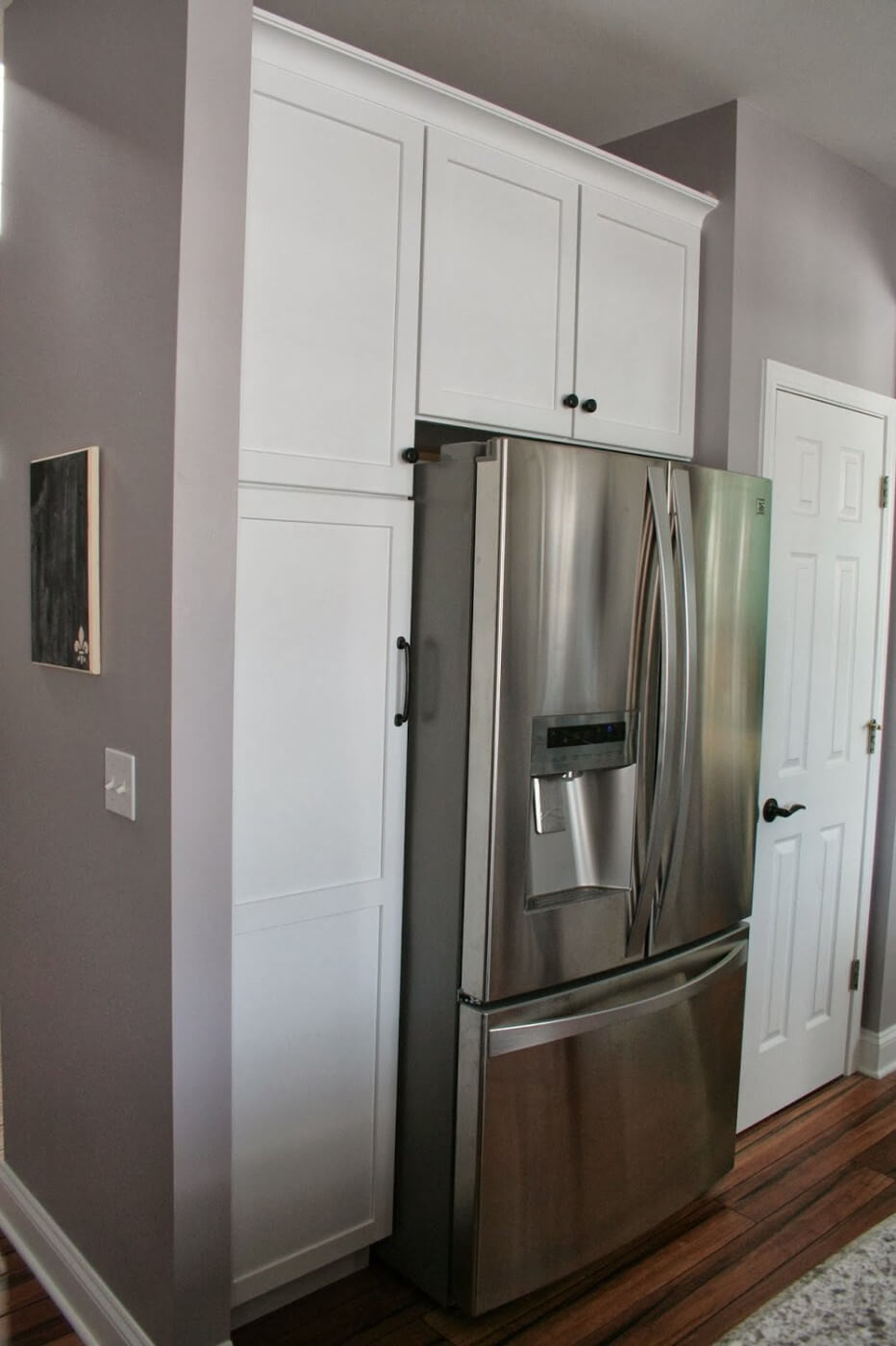
If the case of your refrigerator sticking out too far, you've got a few options.
1. Ensure you have a counter depth fridge and not a standard depth fridge. Hopefully, after reading this post you will know the difference and can shop accordingly. This is obviously an expensive option, but worth mentioning.
2. Install recessed plumbing and electrical fixtures in the wall behind the fridge (if you don't already have them). This option is fairly low cost and can free up an inch or two.


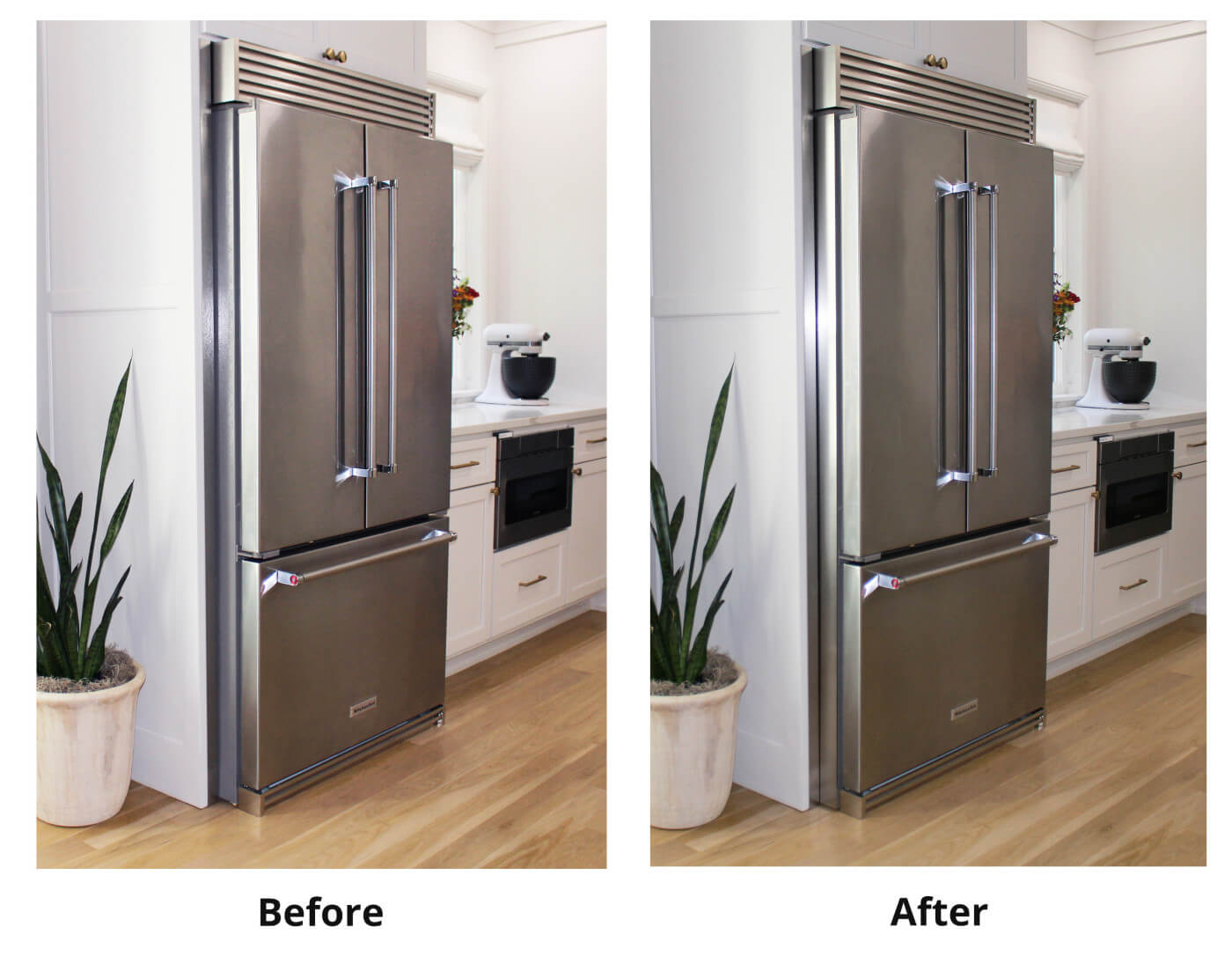
3. Install "end panels" to hide the case of the refrigerator. These are decorative trim panels with a stainless steel finish which adhere to the side of a refrigerator and match the stainless doors.
In conclusion, when shopping for a refrigerator, it is important to keep all fridge measurements in mind. Measure the size of your current kitchen space to ensure you are getting a fridge that fits. Counter depth refrigerators typically have cases measuring 24 inches deep and regular depth refrigerators are closer to 29 inches deep. Don't forget about the thickness of the doors which can add additional inches.
If the case of your refrigerator is sticking out like a sore thumb in your kitchen, you might want to check out our end panels. As long as you keep these tips in mind, you won't have any problems finding the perfect sized refrigerator for your home!
FAQs
Why does my refrigerator have to stick out past the cabinets?
Most refrigerators are designed so that when you open the doors, the overall width of the appliance increases. If the doors are installed flush with the cabinet or trim kit, they'll collide with the sides and won't open properly. The refrigerator needs to be pulled forward so it protrudes by the depth of the doors, allowing them to open freely without hitting the surrounding enclosure.
How can I achieve a truly flush, built-in look without the doors sticking out?
To get a flush appearance, look for a refrigerator with zero-clearance hinges. Currently, LG is one of the only manufacturers offering these models. Zero-clearance hinges allow the doors to open fully without increasing the refrigerator's overall width, so the appliance can sit flush (or nearly flush) with the trim kit.
My refrigerator is already installed, but the painted sides are sticking out and visible. How can I fix this?
Standard-depth refrigerators often extend beyond the cabinet, exposing their painted casing. If the painted case protrudes by more than 3/4-inch, we offer custom stainless steel side panels designed to hide it. These panels attach directly to the exposed sides of the refrigerator using high-adhesion VHB tape or magnets, covering the painted case so it looks like a continuation of the stainless steel doors.
Which trim kit style should I choose if my refrigerator sticks out?
It depends on how far the refrigerator protrudes. If the front of the doors protrudes 4-1/2 to 4-7/8 inches or less from the cabinet face, a proud mount top grille is recommended — its slotted brackets can extend outward to sit flush with the doors. If the protrusion is greater than 4-7/8 inches, choose a flush mount. Stretching a proud mount too far creates a busy look with three different surface depths.
I am building new cabinets. How deep should they be to prevent my refrigerator from sticking out too far?
Your cabinet depth needs to be greater than the refrigerator's depth to keep the case hidden. As a general rule for new construction, we recommend a minimum cabinet depth of 26 inches for counter-depth refrigerators, and a minimum of 32 inches for standard-depth models.